Three new scholars – in computational sociology, health and work, and the social determinants of health – and a promotion to Full Professor for a leading scholar of genocide
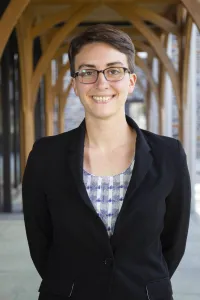
Aidan Combs, Assistant Professor
Dr. Aidan Combs joined our department as an assistant professor in 2025 after a year as a postdoctoral scholar in Germany, affiliated with the University of Bamberg’s Fundamentals of Natural Language Processing Group and the University of Stuttgart’s Institute for Natural Language Processing. She earned her PhD from Duke University in 2024. Dr. Combs studies the connotations of the labels we use for social categories – how those categories develop and change, and how they shape identity, discourse, and social interaction. Her work is grounded in social psychology and cultural sociology and reaches into work and occupations, linguistics, politics, health, gender, and criminology. She uses quantitative and computational methods including field experiments, surveys, and natural language processing – using large language models and other AI to study social processes across large bodies of text – and builds open-source software for researching identity in social interaction. Recently she has examined how people express and interpret emotion through images and text on social media.
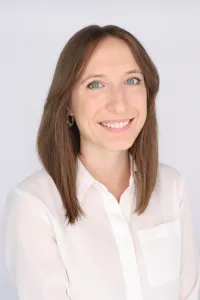
Emily Ekl, Assistant Professor
Dr. Emily Ekl also arrived as an assistant professor in 2025, after completing her PhD at Indiana University. She studies how status, medicine, and work combine to generate inequalities. One line of research examines how healthcare professionals of different statuses provide care; a second looks at how health and healthcare inequalities emerge among people in different work and educational situations; a third investigates how individuals with chronic illnesses draw on social networks for support. She uses both qualitative and quantitative methods. Recently she conducted a series of studies on COVID-19 experiences – two on Hispanic immigrants and their families and the dynamics of pandemic precarity, and another on college students’ mental health, physical health, and educational expectations, and how these varied by disability status. Her dissertation examined how speech-language pathologists deliver quality patient care under the dual constraints of organizational regulation and limited professional status.
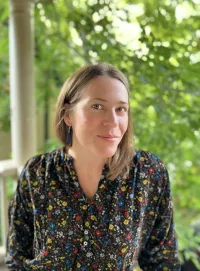
Bethany Everett, Associate Professor
Dr. Bethany Everett transitioned to our department as an associate professor from the University of Utah in 2026; she earned her PhD from the University of Colorado. A prolific scholar with more than 90 peer-reviewed articles, she mostly uses quantitative methods to examine the social patterning and social determinants of health inequalities in the U.S., emphasizing norms, stigma, identity, and social structure. Much of this work centers on gender and sexual-orientation disparities in health, and she has contributed influential research on reproduction as a site of inequality. Her research has been continuously funded by the National Institutes of Health, primarily NICHD. An award-winning teacher, she regularly teaches courses on gender, sexuality, and health; social statistics; social epidemiology; and medical sociology, and serves as an associate editor of Archives of Sexual Behavior.
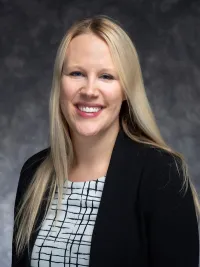
A Promotion: Hollie Nyseth Nzitatira, Full Professor
Dr. Hollie Nyseth Nzitatira seeks to understand the world’s worst atrocities so that we can work to prevent similar things from happening again. In 2025, Ohio State recognized both the scope and impact of her work by promoting her to full professor. Her scholarship centers on genocide, human rights, and how societies rebuild after violence. She has published more than 70 articles in leading journals, and her book Reintegrating After Genocide offers insight into how communities come back together after unimaginable harm.
Hollie is equally committed to mentorship and teaching: many of her publications are coauthored with students she has guided, and her three-week study-abroad course in Rwanda immerses students in the realities of genocide and its aftermath. Her book, Teaching the Human Story of Genocide, written for middle and high school educators, brings lessons of prevention into classrooms nationwide. Through scholarship, teaching, and public engagement, she is actively contributing to a more just and humane world.