Our PhD graduates are making an impact difference in academia, government, nonprofits, and business. Meet a few of them below and let us know what you're up to. Share your news at sociology-info@osu.edu.
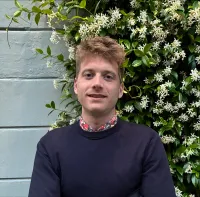
Alec Rhodes, PhD 2023 – Purdue University
Alec Rhodes studies how social policies shape economic inequality, poverty, and social mobility as an assistant professor at Purdue. He seeks to understand how wealth and debt accumulate across the life course, and how national and state policies and labor-market conditions create diverging economic trajectories, with a focus on vulnerable populations – studying labor unions, unsecured debt, and the social safety net as drivers of inequality. Starting this fall he joins a project with the new Center for Aging Families, examining how children’s intergenerational mobility influences aging parents’ health.
“During my graduate studies at OSU, I learned how to ask big-picture questions about how social structures and institutions shape the distribution of resources and life chances. The advanced methodological training and project-management skills I acquired – in coursework and as a research assistant – have been especially useful in my transition to a faculty role. I also benefited from a stellar cohort of fellow PhD students who have been an important source of inspiration and mentorship.”
Paola Echave, PhD 2021 – University of Texas at El Paso (UTEP) and the Urban Institute
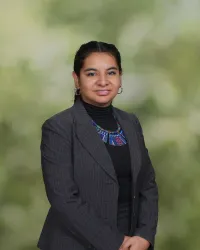
Paola Echave, PhD, is an Assistant Professor in the Department of Sociology and Anthropology at the University of Texas at El Paso (UTEP) and an Affiliate Scholar at the Urban Institute. Her scholarship sits at the intersection of population health, migration, and public policy, drawing on rigorous quantitative and qualitative methods. Echave has extensive experience in the design and implementation of large-scale social science and demographic surveys.
Some of her more recent research focuses on the role of immigration enforcement on the health, economic, and social well-being of immigrant communities. Her other work is taking a closer look at the structural conditions, including environmental disasters, that contribute to migration, health disparities, and labor exploitation in the US and globally. She is part of the 2026–2027 cohort of the Increasing Diversity in and Equitable Access to Applied Learning in Disaster Response (IDEAAL DR2) Fellowship. Her research has been published in peer-reviewed journals and has been featured in many media outlets, including DC News Now, ScienceDaily, Ohio State News, Fox 8 News, Chicago Tribune, and international outlets, such as The UK Times.
Before joining UTEP, Echave worked as a senior research associate at the Urban Institute, where she was the project manager of the Annual Survey of Refugees, led research on access to public programs for immigrant families and identification of policy areas that can be advanced to protect the well-being of immigrant communities. Echave holds a doctorate in sociology from the Ohio State University, master’s degrees in sociology from the same university and BA in criminology from the University of New Mexico.
"When I decided to pursue a doctoral education, I was mostly interested in finding a program that offered rigorous training in demographic methods. The Department of Sociology at OSU stood out among my options, not only because it has well-known scholars in demography, population health, and immigration, but because the professors and students showed a genuine willingness to help me build the quantitative skills I needed to conduct research on immigration and health. Dr. Kammi Schmeer, Dr. Hui Zheng, and Dr. Reanne Frank were fundamental to my academic growth. Thanks to the training and confidence they instilled in me, I am now able to conduct research informed by my lived experience as an Indigenous immigrant, alongside the knowledge I have built and continue to build along the way."